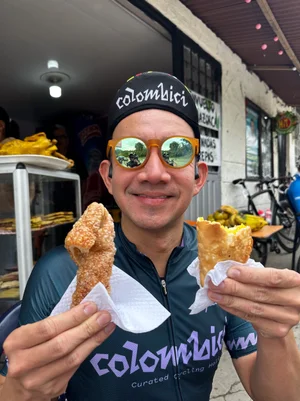
Why Colombians don’t drink their best coffee.
The Country That Grows the World’s Best — But Drinks the Rest.
The seal of the world's best. Rarely seen at home.
Colombia’s Coffee Paradox
You've finally made the trip. The country that produces some of the most sought-after Arabica on the planet. The origin story. The names printed in small italics on expensive coffee bags in London, L.A., Melbourne, and Tokyo.
Colombia exports over 10 million bags, or 93%, of its coffee annually. Its growers have set global auction records: one lot sold for over $2,000 per kilogram in 2025, another broke the Cup of Excellence all-time record at $135 per pound. International coffee experts consider Colombian beans the gold standard. The world has made its decision: this is where the best coffee comes from.
Then you order your first coffee here.
It arrives in a small plastic cup, too hot to hold, so you grip the rim with your fingertips. The liquid inside is light brown, watery, and a touch sweet. It's not terrible. But it's not what you flew here for. This is a tinto, and for most Colombians, it is simply coffee. The everyday cup made from what's left once the good stuff ships.
Tradition, for generations.
The Poor Man’s Wine
Tinto literally means red wine in Spanish. Not good red wine, the cheap, rough kind that laborers drank because it was all they could afford. The word arrived with the colonizers and never lost that meaning. So when Colombians needed a name for their daily cup, they borrowed it from the bottom shelf of someone else's wine rack. The country that grows some of the world's most expensive coffee has, for generations, called its everyday cup after wine nobody wanted. That's not a coincidence. It's a class system in a single word. And yet, something stuck. Tinto today doesn't carry shame. It carries habit. It's the cup you drink without thinking, the one that's always there, the one that asks nothing of you.
Export The Best. Drink The Rest.
The story starts in the mid-twentieth century, when Colombia's coffee industry was built around one single purpose: export. The Federación Nacional de Cafeteros, the powerful growers' federation known as the FNC, established grading systems and trade relationships designed to move the highest-quality beans to foreign buyers as efficiently as possible. Grades like Supremo and Excelso, the best of the harvest, were shipped abroad. The economics were simple and brutal: international buyers paid three to five times what the domestic market could afford.
The result is a system where the grower and the drinker are different people, on different continents. Visit a coffee finca in the Eje Cafetero, and you may meet the farmer who tends some of the world's most prized plants, then drinks a tinto that costs a fraction of what he grows. That's what's affordable, what's available, what's left once the good stuff has been loaded and exported.
But economics alone don't explain it. Culture does the rest. In Colombia, coffee has always been a social currency, before it's been about flavour. A tinto shared between friends, family, or a stranger is a gesture of welcome, a punctuation mark in the day, a ritual that has nothing to do with tasting notes or process. It's never meant to be dissected or savoured. It's communal, habitual, and entirely practical.
Compare this to wine cultures in France or Italy, where the producer and the drinker have always been the same person, where quality stayed local because local people demanded it and could afford it. Colombia never developed that feedback loop. For generations, the relationship between Colombian families and their coffee was defined by the harvest. Quality, as a concept applied to one's own consumption, simply wasn't part of the equation.
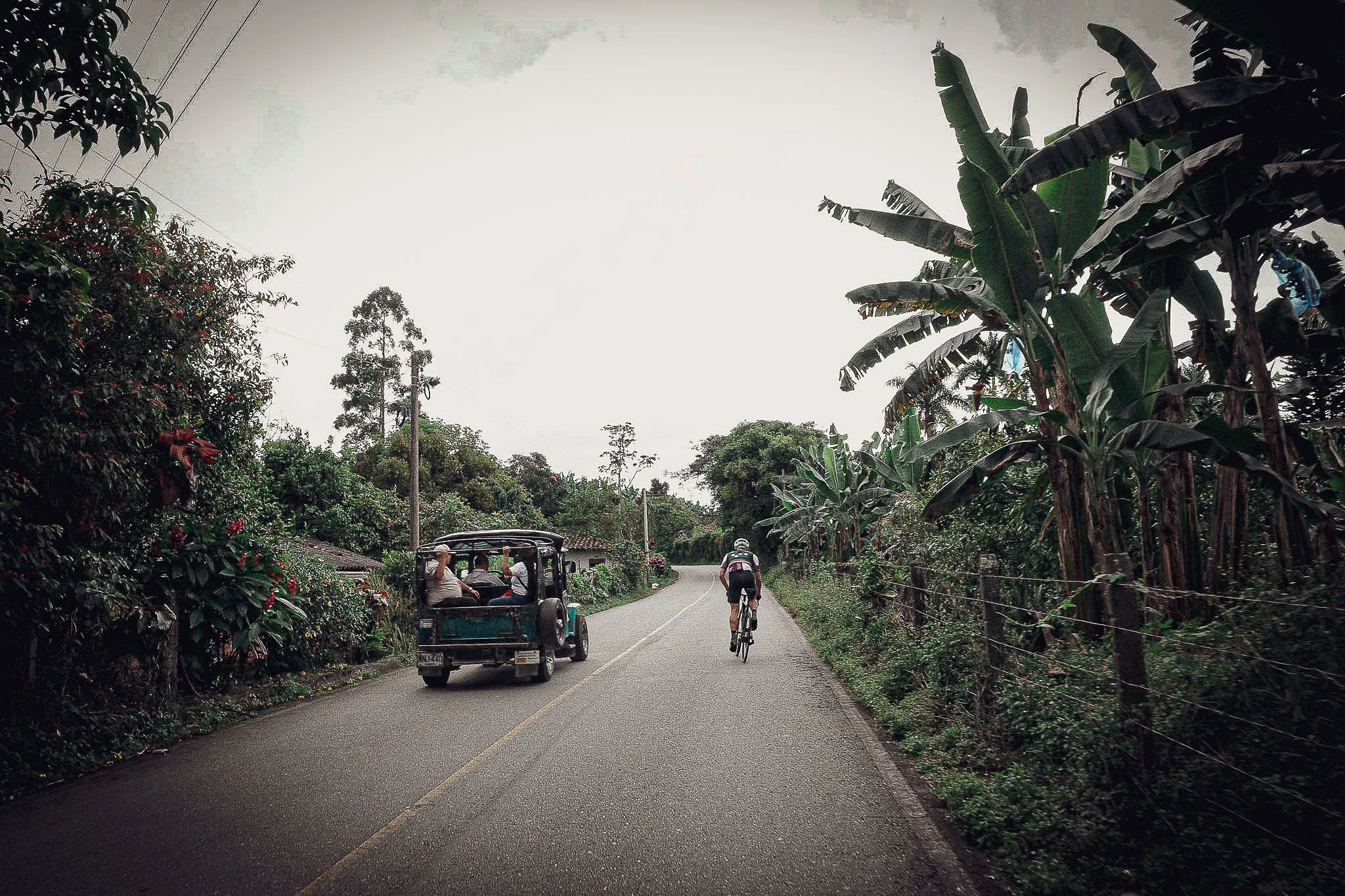
Some come for the climb. Most leave talking about the coffee.
The Best Coffee You Won’t Get in Colombia
Colombia is one of the world's newest mass-tourism destinations, and this matters more than it might appear. For most of the twentieth century, the country was closed to international visitors, with decades of conflict, instability, and a reputation that kept travellers away. The transformation of the last fifteen years has been remarkable. The Eje Cafetero, the UNESCO-listed Coffee Triangle, has become a destination in its own right, with people arriving specifically to walk the fincas, understand the process, and trace the journey from soil to cup.
Many of these visitors arrive with a specific expectation: that the country famous for great coffee will serve them great coffee. The gap between that expectation and reality produces a strange hospitality irony. An Australian guest bluntly asked us: 'Why don't Colombians drink their best coffee?'
That question has a long answer. This article is most of it.
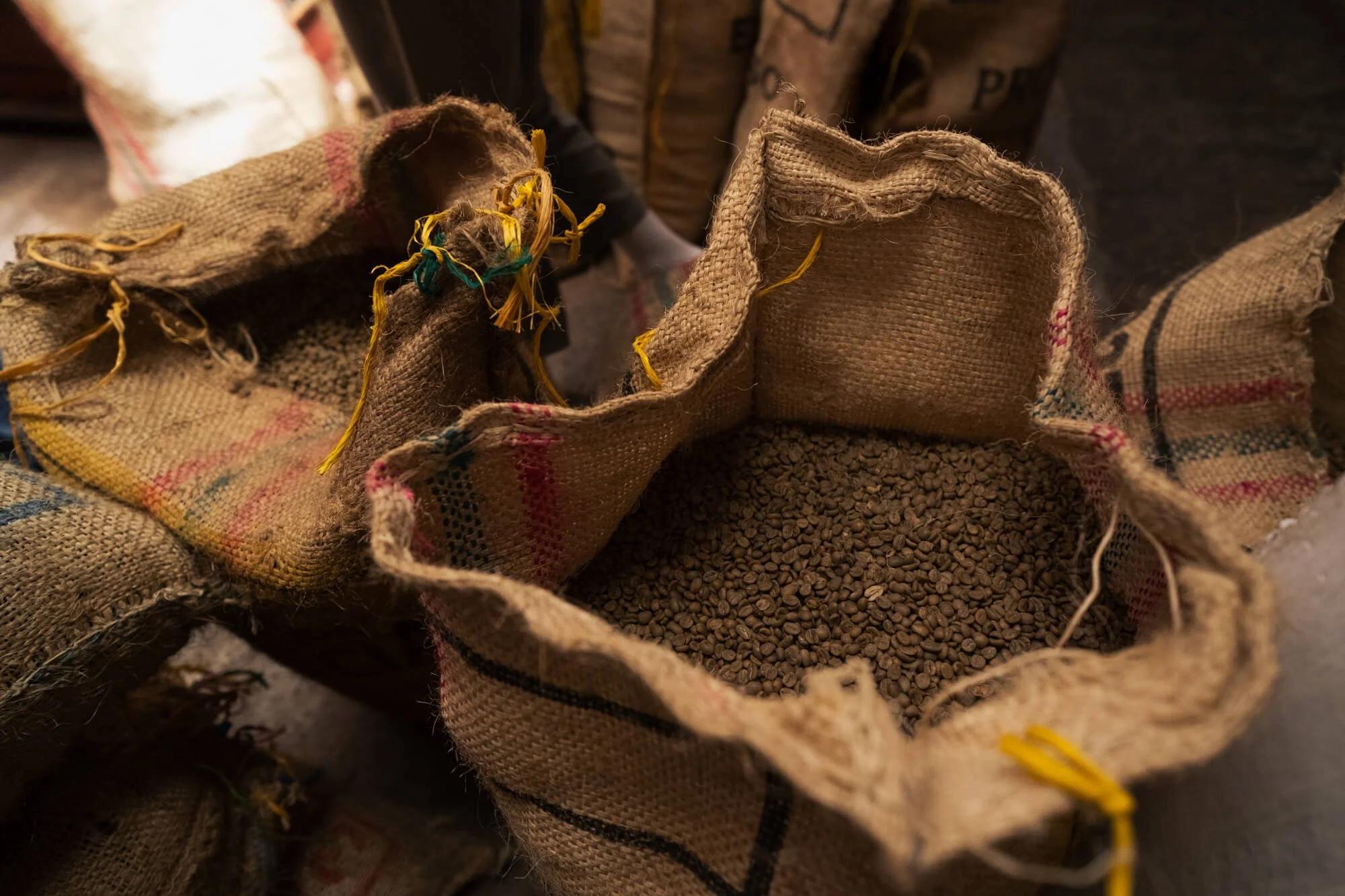
Best beans are bound for somewhere else.
The Third-Wave of Tinto
The answer, when you find it, tends to come from people like Lorena Gil.
Lorena runs her farm independently in Pijao, Quindío, a small municipality tucked into the Coffee Triangle that most visitors, and most coffee buyers, never reach. The microlot she produced for Tinto by Colombici is 15 kilograms of green bean. Not a commercial run. A single harvest, a single farm, traceable to a single producer who grows, picks, and processes every bean in the bag. The varietal, altitude, and process details are listed on the bag.
That traceability is exactly what Orígenes Col, a micro-roastery in Salento, has been arguing for since they opened. Daniel and Diana, the couplepreneur duo behind it, are certified roasters, tasters, and educators who source from producers they know by name, roast on site, and serve export-grade Colombian coffee to anyone who walks through the door. When we asked Daniel why Colombians don't drink their best coffee, he said:
“For years, the best of our lands, harvests, and coffees were always destined for export. Today, something has changed. Colombians are finally reclaiming the best of our coffee at origin.”
– Daniel Gómez, Education Lead and Q Arabica Grader, Orígenes Col.
We recognised something in how they think about coffee, and they in how we think about travel. That's why we're collaborating. Lorena's microlot, curated by Orígenes Col, is the first run.
This is the pattern taking shape across the Coffee Triangle: small, serious people, a new generation who believe Colombia's best single-origin coffee should stay local, too.
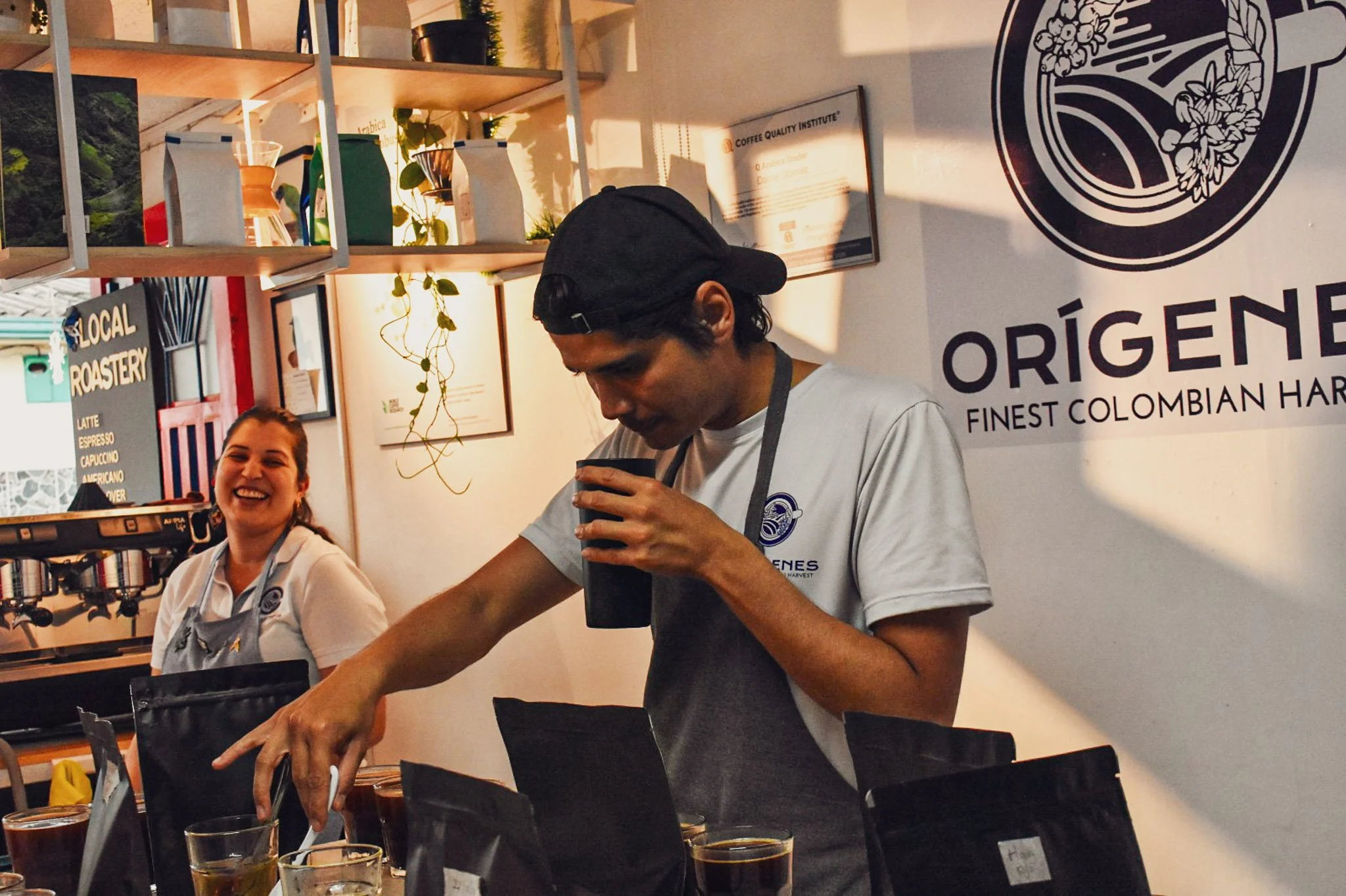
This couple-preneur is changing how a new generation drinks its own coffee.
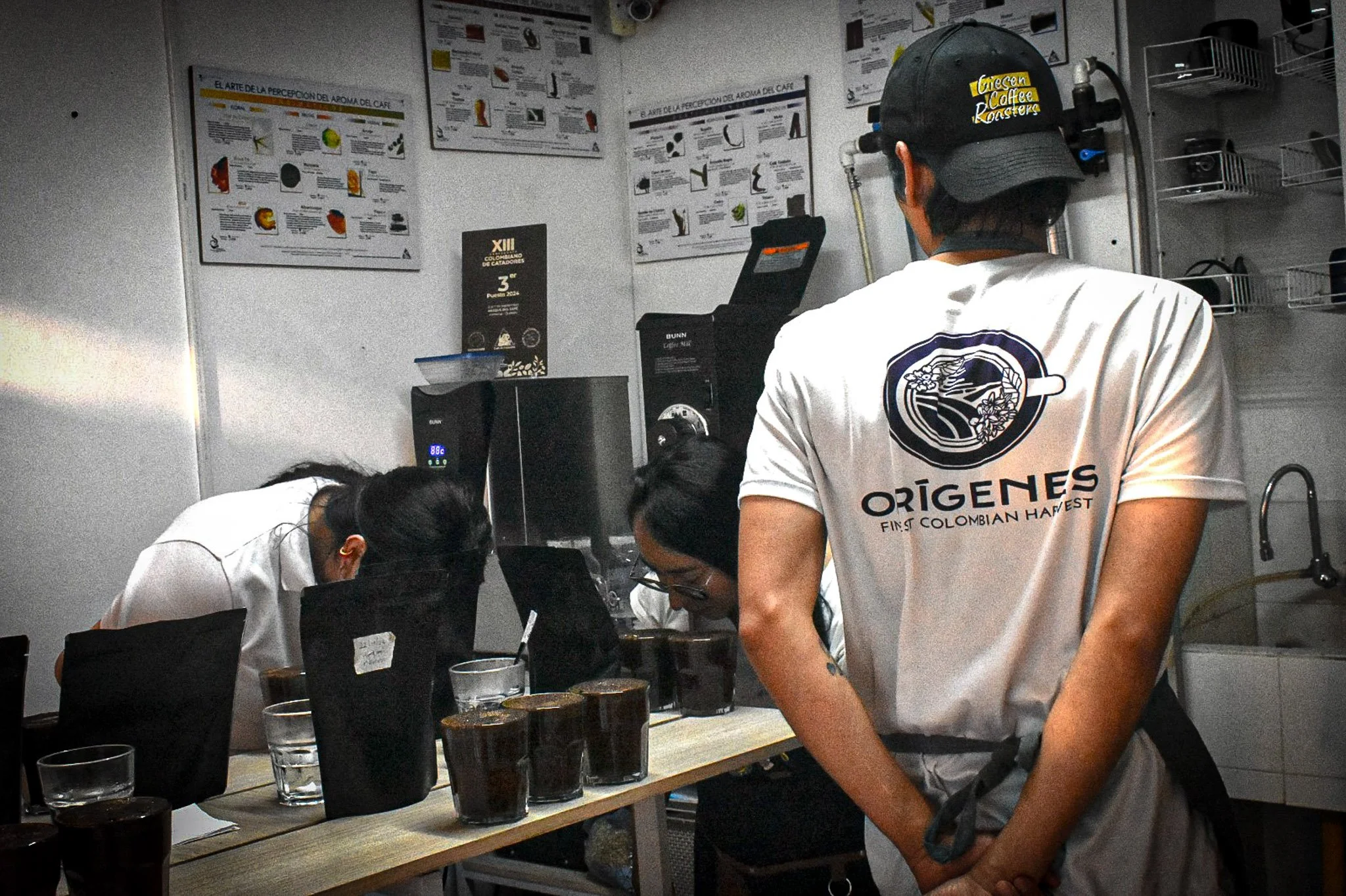
A new generation of Colombians is discovering the quality that was always theirs.
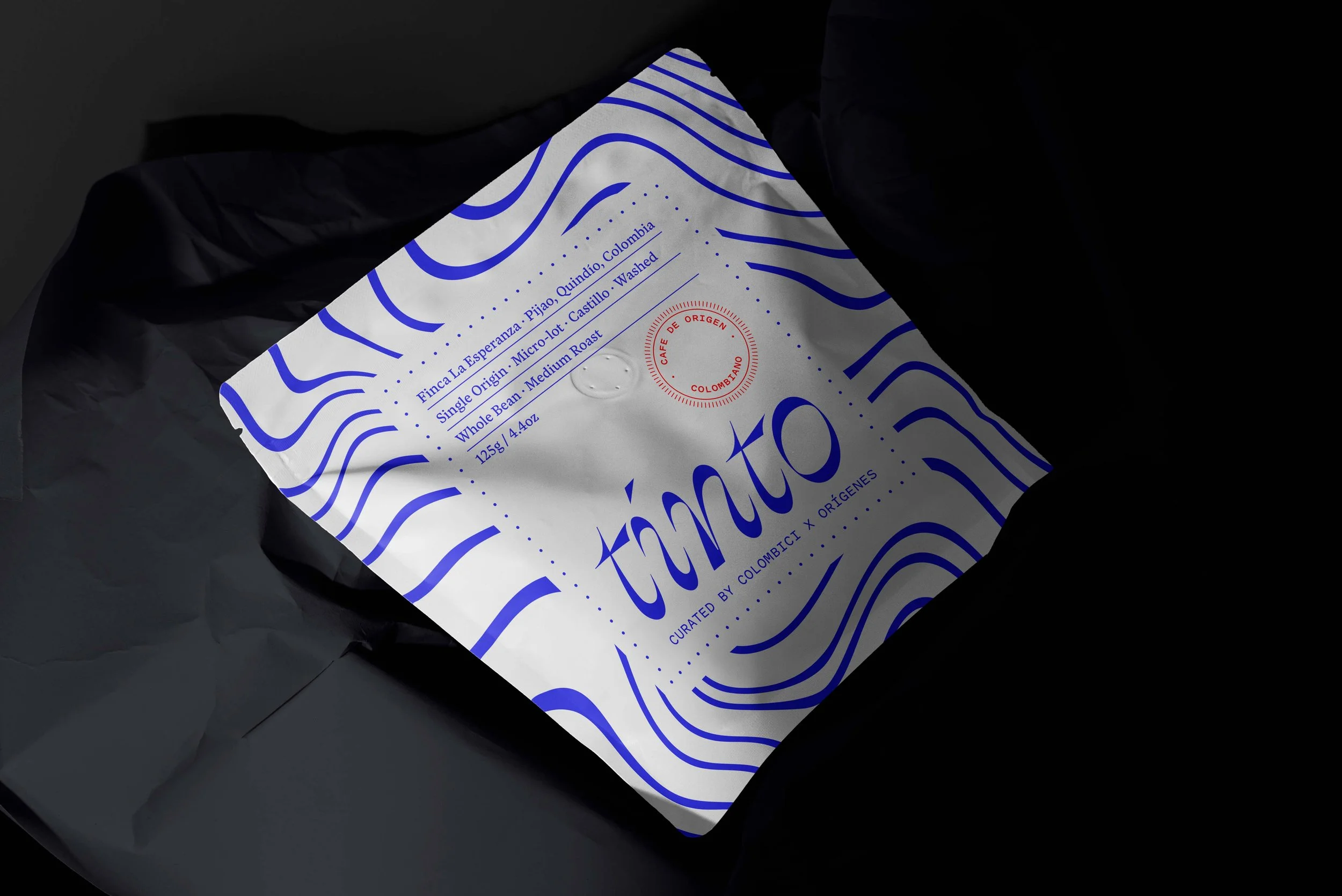
Same Name. Better Coffee.
For decades, Colombia's best beans had one destination: elsewhere. That's shifting. Specialty coffee buyers around the world are now travelling to origin, asking for microlots by name, and paying attention to who grew what and where. Colombians who've lived abroad have tasted what their own country produces and come home wanting it. The loop is beginning to close. And the hope is that soon, any Colombian can drink their best coffee, grown on their own soil, at a price that's finally affordable.
Tinto is what Colombians have always called their daily cup. Not fancy. Not fussed over. Just good coffee, every day, the way it should have always been. Tinto by Colombici x Origenes is what that cup was always meant to be. Everyday excellence, without the speciality fatigue. The name stays. What's in it changes.
Lot 1, a 15kg micro-lot, transparently sourced from Lorena Gil's farm in Pijao, Quindío, curated and roasted by Orígenes Col in Salento, keeping the good stuff for the people and the place that deserves it.
Explore Tinto by Colombici or ride the experience with our Coffee Heartlands Select Tour.